



Social housing needs a more proactive approach to repairs and maintenance
New report from Sureserve calls for a decisive shift from reactive repairs to prevention-first maintenance in social housing.
As the social housing sector grapples with growing repair costs, stricter regulatory regimes and increasing demands and expectations for healthy homes, a clear lesson is emerging. Responding faster to problems around damp and mould is great, but it’s expensive, and it’s still not enough.
Landlords need to prioritise proactive and preventative repairs and maintenance, not just react to problems after they arise.
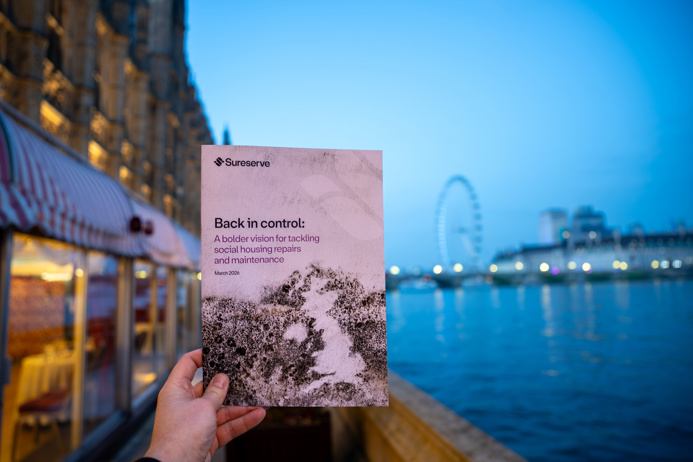
Presented at the House of Lords on 9 March, the report challenges the sector to rebalance spending by 2030 – shifting from roughly 70:30 reactive:preventative to at least 30:70 in favour of prevention.
Bringing the conversation to Parliament
Launched in Parliament with support from Lord Best, the event brought together more than 150 senior figures from housing and public policy to discuss how the sector can meet this challenge.
Speakers included Lord Best, Jenny Riddell-Carpenter MP on behalf of the Healthy Homes and Buildings APPG, Phil Tyler, chief information officer at Sureserve, and Paul Norman, director of asset strategy at Clarion Housing Group.
The reception was also attended by parliamentarians and civil servants, underlining the growing political focus on the condition of social homes.

A new urgency for social landlords
The death of Awaab Ishak in 2020 brought national attention to the consequences of damp and mould in social housing, and expectations on landlords have shifted sharply since.
Our report argues that reactive repairs are becoming harder to sustain. Demand is being driven up while repeated callouts add cost and strain to already stretched teams.
More than 80% of the social housing providers surveyed as part of this report expected responsive repairs and maintenance costs to rise again this year. The average estimated increase in repairs costs was 23% - much higher than the 10% increase suggested in the Housing Regulator’s latest Global Accounts.
Most respondents also estimated that between 10% and 25% of homes in their portfolios required damp and mould remediation, also a higher estimate than has been reported elsewhere (the Housing Ombudsman’s latest estimate was that just 7% of properties are affected by damp and mould).
The case for proactive, planned and preventative repair programmes is clear. Damp and mould are rarely caused by one issue alone, and effective action means tackling root causes early.
As the report outlines, a proactive model includes:
- Emphasising long-term solutions over short-term measures such as mould washes.
- Investing in resident and staff training, education and communication about signs, causes and solutions to damp and mould.
- Highlighting the importance of appropriately specified, designed and operated ventilation to staff, contractors and residents.
- Trends captured on every visit to build rolling stock condition insight, and surveys would be updated every time teams go in.
- Clear information provided to residents and staff, and landlords listening and responding in a timely manner.
- Social housing professionals working as one team towards clear goals, from CEOs to caretakers, to ensure that every visit improves property quality and health.
- Property Health Checks (which involve adding whole-home checks to gas safety ones at marginal cost). These help boost productivity, reduce burdens on residents, deliver better homes and free budget for priorities such as safety and new supply.
The Sureserve reports highlights practical approaches to tackling damp and mould and being more proactive, many of which we can already evidence.
One example is our Healthy Homes Check model, which expands compliance visits to identify signs of damp and mould and other risks before they worsen.
The report also explores the role of connected technologies, including sensor-led monitoring and digital engagement tools, in helping landlords detect patterns in temperature, humidity and ventilation earlier.
Working together to improve outcomes
There is no single solution to damp and mould or to the wider pressures facing repairs and maintenance services. But there is a growing consensus that the current model needs to evolve.
At Sureserve, we want to support that shift. Our report calls for a broader conversation across the sector about how to reduce avoidable repairs, improve living conditions and create a more resilient, prevention-led model for social housing maintenance.
Download the full report to explore the findings and recommendations in more detail.